The History of Trinity Lutheran Church Warrenville
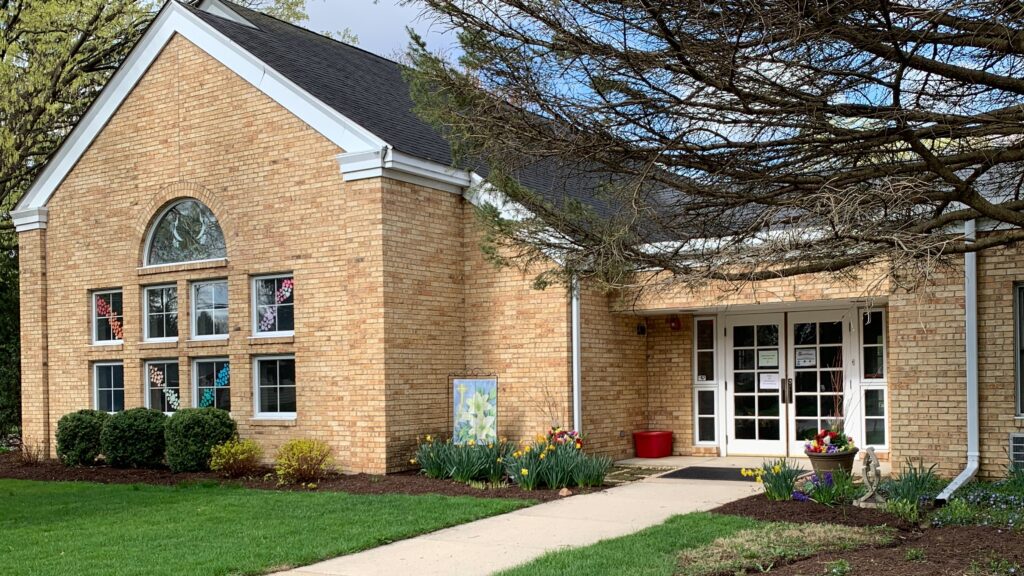
For more than eighty years, Trinity Lutheran Church has been part of the fabric of Warrenville—small in size, but big in heart. Often known as “the little church that does big things,” Trinity has always found creative and meaningful ways to serve both our neighbors and the wider world. Recently, a fellow pastor playfully described us as “that wacky church that will take anybody”—and honestly, we’ll take it as a compliment. At Trinity, we believe that everyone has a place here, and we’re proud of the warm, open-hearted spirit that has guided our journey from the very beginning.
Humble Beginnings (1942–1950s)
Trinity’s journey began in 1942, when a small but hopeful group began holding worship services in the Community Building in downtown Warrenville. In those early years, Trinity was a fledgling congregation striving to gain a foothold in the community.
That hope took tangible form in the 1950s, when members came together to build a dedicated house of worship and, soon after, a parsonage at the northwest corner of Aurora Road (now Warrenville Road) and Curtis Avenue. From that day to this, Trinity has remained anchored at that very site—a steady presence in an ever-changing world.
Rooted and Growing (1950s–1960s)
Throughout the 1950s, Trinity grew into a recognized fixture of Protestant worship in Warrenville. By the early 1960s, the need for more space—especially for Sunday school—was clear. With remarkable dedication and almost exclusively volunteer efforts, the congregation built an additional wing for religious education, situated north and west of the original sanctuary. This expansion not only met an immediate need but reflected a forward-thinking vision.
Faith and Expansion (1970s–1980s)
For the next 15 years, Trinity experienced steady growth. When the property immediately west of the church—the “Abbott Property”—came up for sale in the late 1970s, the congregation faced a big decision. Despite not having a specific plan and facing the risk of debt, members stepped forward in faith and purchased the land. That bold choice would soon prove prophetic.
By the mid-1980s, worship attendance had grown to the point where a larger sanctuary was needed. Over the next three years, the original 60-seat worship space was replaced by a beautiful, fan-shaped sanctuary that could welcome up to 200 worshipers. Trinity’s growing role in community life and civic engagement helped fuel this expansion. During this time, the church emerged as a leading Protestant voice in the Warrenville area.
Maturing in Ministry (1990s)
Following the completion of the new sanctuary, attendance surged before stabilizing during the 1990s. During this time, the church pastor was able to fulfill a personal goal of transitioning from the on-site parsonage to a single-family home in Warrenville, allowing his family to experience home ownership while remaining deeply rooted in the community.
A New Century, A Renewed Vision (2000s–2010s)
With the dawn of the 21st century, Trinity was once again ready to grow. Embracing an “Open and Affirming” philosophy, the congregation extended a warm welcome to many who had previously felt excluded from faith communities. This inclusive spirit energized the congregation and broadened Trinity’s reach.
While continuing to support local efforts in Warrenville, Trinity also turned outward, engaging in mission and relief work from West Africa to South America—embodying a Gospel lived both locally and globally.
Reimagining the Campus (2010s)
Once again, Trinity’s spiritual growth was reflected in a transformation of its physical space. The old parsonage and Abbott house—purchased decades earlier in a leap of faith—were removed to make way for much-needed parking and open space. Letting go of those buildings (and the rental income they provided) was a difficult choice, but true to Trinity’s character, the congregation stepped forward in faith. Today, that added space has made the church more welcoming and accessible to all who come seeking connection, worship, and the love of Christ.
A Time to Reflect (2020s)
When Pastor Justin Baxter arrived during the challenges of the COVID-19 pandemic, it marked the beginning of a new chapter—not just in leadership, but in identity. That season prompted the congregation to pause and ask some big, honest questions: Who are we? What are we called to be in this moment? How can we truly serve?
Out of that time of listening, prayer, and conversation, a new mission emerged: To Reflect the Radical Love of Christ. It wasn’t a reinvention so much as a clearer expression of what Trinity had always tried to be—a church that welcomes, gives, forgives, and includes with intention and joy.
The Journey Continues
In recent years, Trinity has tried to live more fully into what it means to be a community church. We’re still figuring things out as we go, but one thing we’ve learned is that showing up for our neighbors—consistently and with open hearts—really matters. We’ve strengthened our connection to the Johnson School and its families through partnerships like the Johnson Family Connection and have worked intentionally to create spaces where neighbors can gather, feel welcome, and experience joy.
Our calendar now includes free, family-friendly events like the Fun Fair, Fall Fest, monthly Pancake Breakfasts, and a full Thanksgiving Dinner—each one offered as a gift to the community, no strings attached. At the same time, we continue beloved traditions like our 25+ year Live Nativity, which remains a meaningful way we share the Christmas story with friends and families from all walks of life.
We still call ourselves “the little church that does big things,” even if we sometimes stumble our way there. And we’ve come to appreciate the nickname a fellow pastor once gave us: “that wacky church that will take anybody.” Both feel honest. We’re not flashy or flawless, but we do our best to show up with kindness, curiosity, and care. If you’re looking for a place that’s a little imperfect but full of heart—you might just find a home here.